
Careers once rode on the strength of institutions. Today, survival may depend on the strength of one’s own professional identity.
The news reports appear almost casually now.
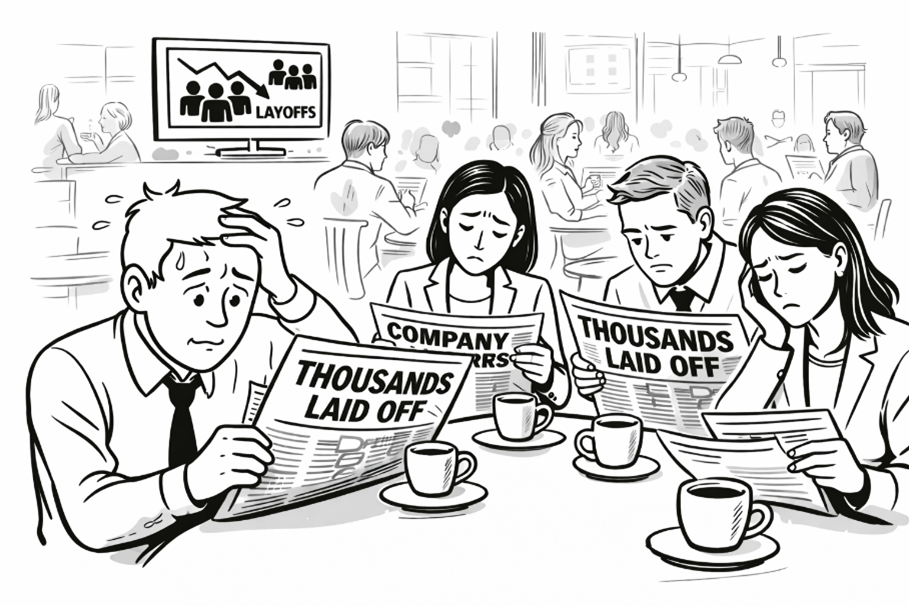
Another large technology company announces layoffs. Thousands of employees are asked to leave. Careers that seemed secure yesterday suddenly find themselves suspended in uncertainty today. Recently even companies like Oracle Corporation have announced workforce reductions as part of restructuring.
One cannot help asking a difficult question.
Is this becoming the new normal?
When such announcements appear in the headlines, public attention often turns to strategy, markets, and corporate restructuring. But behind every such announcement lies a quieter question.
What happens to the professionals who suddenly find themselves outside the gates of institutions they believed would carry their careers forward?
Not very long ago, careers followed a far more predictable rhythm. A professional joined an organisation, grew within its structure, and often spent decades within the same corporate family. The company’s reputation, hierarchy, and institutional prestige carried the individual forward. Loyalty and longevity were rewarded. The name of the organisation itself became a powerful endorsement of the individual’s professional standing.
But that world has steadily faded.
Technology is reshaping industries at a breathtaking pace. Artificial intelligence is transforming professional roles. Global supply chains shift rapidly in response to geopolitical tensions, economic shocks, and changing trade alliances. Entire industries can rise, transform, or decline within a decade.
When institutions themselves face such volatility, the professionals within them cannot remain untouched.
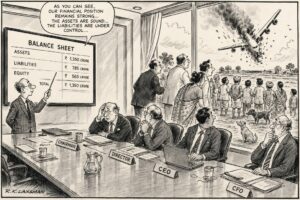
History offers many reminders. At different moments companies like Intel and Kodak symbolised technological leadership and corporate strength. Professionals associated with such organisations carried the aura of powerful institutions. Yet markets changed, technologies evolved, and once-dominant companies found themselves struggling to adapt.
The mobile phone industry offers similar lessons. Giants such as Nokia and BlackBerry once defined the direction of global communication. Yet the arrival of new technologies and new competitors altered the landscape with astonishing speed.
These examples are not merely stories about companies.
They are reminders of how quickly professional certainty can disappear when institutions lose their footing.
So the question returns.
When institutions rise and fall with such speed, how should professionals prepare themselves?
Nearly three decades ago, management thinker Tom Peters offered an insight that has only grown more relevant with time. In his famous article “The Brand Called You,” he argued that every professional must begin to think of themselves as the chief executive of their own professional identity.
His message was simple but profound.
In a world where organisations constantly evolve, the most enduring asset a professional carries is not the company name on a visiting card but the reputation attached to their own name.
This is not a fashionable idea about self-promotion. It is a practical response to a changing world of work.
Building such a professional identity may not shield anyone from disruption. Companies will still restructure. Industries will still transform. Technologies will still overturn familiar landscapes.
But when the ground beneath institutions begins to shift, those who have built a reputation beyond the walls of their organisation stand a better chance of finding their footing again.
Because in an uncertain world, the most reliable institution a professional can build is their own name.
The brand called you.


 Business and Economy
  Education
  Food
Food  Government
  Lifestyle
  Politics
  Travel
  World
World