
From revolution to oil shocks, decades of global decisions have deepened mistrust, energy insecurity and human loss in the Iran–Israel conflict.
By Ravishankar Kalyanasundaram
The confrontation between Iran and Israel is often portrayed as a bitter, inevitable clash between two determined adversaries. Yet history suggests a more complicated truth. This crisis did not emerge in isolation, nor was it shaped by one decision or one nation alone. It is the result of decades of revolutions, wars, shifting alliances and abrupt international interventions that have steadily hardened mistrust and widened the stakes far beyond the region.
The first rupture came in 1979. Iran’s Islamic Revolution overturned the strategic balance of West Asia almost overnight. A country that had quietly cooperated with Israel and Western powers became an ideological opponent. Diplomatic ties collapsed. Analysts at the time warned that the shock would reshape regional politics for years. Those warnings proved accurate. Suspicion replaced engagement, and rivalry began to take institutional form.
The next decisive chapter was written during the Iran–Iraq war. When Iraq invaded Iran in 1980, much of the Arab world and several major powers tilted toward Baghdad. Iran fought largely in isolation in a brutal eight-year conflict that cost hundreds of thousands — perhaps close to a million — lives. The war left a lasting imprint on Tehran’s strategic thinking. It reinforced the belief that survival depended not on international assurances but on self-reliance, deterrence and regional alliances capable of countering future threats.
History then turned on an unexpected pivot. In 2003, the United States invaded Iraq and removed Saddam Hussein — the very leader who had once served as Iran’s principal regional counterweight. The decision, taken amid intense global debate and without universal consensus, reshaped the balance of power almost overnight. Iran’s influence expanded across Iraq and into neighbouring theatres. Israel and several Gulf states grew increasingly wary of what they perceived as a widening arc of Iranian presence. An intervention intended to stabilise the region instead deepened strategic competition.
Through the following years, the confrontation evolved into what observers often described as a shadow conflict. Iran strengthened ties with armed groups in Lebanon, Syria and Yemen as part of a deterrence strategy. Israel conducted preventive strikes aimed at disrupting weapons transfers and military build-ups. Each action was justified as defensive. Each retaliation raised the stakes. Civilian populations across fragile states bore the heaviest burden, while diplomacy struggled to keep pace with events on the ground.
A rare opening for de-escalation appeared in 2015 with the nuclear agreement between Iran and six world powers. The deal-imposed limits on uranium enrichment and created a framework for international monitoring. Many experts believed it could slow the trajectory toward confrontation. For a brief period, the prospect of managed tension seemed plausible.
That fragile equilibrium was disrupted in 2018 when the United States, under President Donald Trump, withdrew from the accord and re-imposed sweeping sanctions. Washington argued the agreement was too narrow and failed to address Iran’s missile programme and regional activities. Critics warned that abandoning it without a stronger alternative would shrink diplomatic space and deepen mistrust. Whatever the intention, the decision reinforced a return to pressure and deterrence as the dominant logic of regional policy.
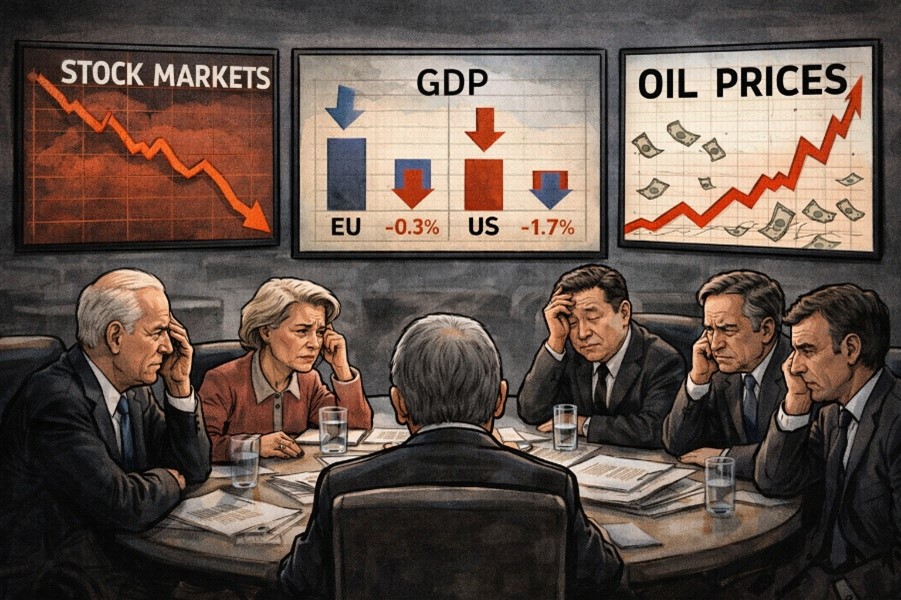
Today the consequences of this long and uneven history extend beyond the battlefield. Nearly one-fifth of the world’s oil and gas supply passes through the Strait of Hormuz, making any disruption a global economic concern. Attacks on shipping routes or energy infrastructure trigger immediate reactions — rising fuel prices, volatile currencies and nervous financial markets. Conflicts linked to the broader regional struggle have contributed to hundreds of thousands of deaths and the displacement of millions, underscoring the human cost alongside economic disruption.
What emerges from these decades is a consistent pattern. Strategic decisions have often been taken in moments of urgency, sometimes without sustained international debate or coordinated purpose. Alliances have shifted. Agreements have been negotiated and then reversed. Military actions have been calibrated but rarely followed by durable diplomatic settlement. Each intervention addressed an immediate crisis while leaving deeper tensions unresolved.
In the end, the heaviest losses are not strategic but human and economic. Each escalation leaves behind a residue of mistrust that hardens future negotiations, an energy shock that ripples through global markets, and grieving families whose stories rarely reach international headlines. What began as a regional rivalry has become a recurring source of worldwide insecurity. The longer it is shaped by hurried decisions and divided international responses, the deeper the collateral damage will run — not only in West Asia, but in the everyday lives of citizens across continents.
 Business and Economy
  Education
  Food
Food  Government
  Lifestyle
  Politics
  Travel
  World
World