
The Russia–Ukraine conflict and the quiet remaking of the world order
By Ravishankar Kalyanasundaram
On 24 February 2022, the world believed it was watching a familiar event — a regional conflict that diplomacy, sanctions and economic pressure would quickly contain. Modern wars, we were told, cannot last. Trade ties are too deep, financial systems too connected, and economies too fragile to sustain prolonged fighting.
Nearly two years later, the war continues.
But its true significance lies not in territorial gains or losses. The conflict has begun to change how nations organise their economies, industries and political priorities. What started as a war between two countries has slowly become a force reshaping the global order.
The battlefield has changed
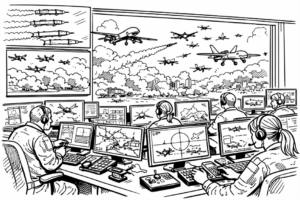
This is the first large-scale war fought in the age of cheap electronics and real-time data. Small drones — often assembled from commercial parts — now destroy tanks costing millions of dollars. Satellite imagery available to civilians helps guide artillery. Software updates alter weapon effectiveness overnight.
The war has demonstrated something new: military strength is no longer determined only by soldiers and armour. It depends on semiconductors, sensors, communications networks and software.
For perhaps the first time in history, code matters as much as ammunition.
The return of defence industry
For three decades after the Cold War, many countries reduced defence production. Large wars were considered unlikely. Factories that once produced artillery shells or armoured systems were scaled down or closed.
The war reversed that thinking.
European governments are expanding ammunition production. Germany created a €100-billion special defence fund. Poland plans one of the largest armed forces in Europe. Japan, after decades of restraint, announced its biggest military expansion since the Second World War. NATO countries have recommitted to the alliance target of spending 2% of GDP on defence, and several now aim to exceed it.
As NATO Secretary-General Jens Stoltenberg remarked, “Peace is not free. We have to pay for our security.”
Global defence spending has now crossed 2.2 trillion dollars annually, the highest ever recorded.
The assumption that economic interdependence would prevent conflict has weakened.
Energy becomes strategy
The first shock of the war was not military — it was energy. Europe discovered how dependence on a single supplier could become a strategic vulnerability. Gas shortages, soaring electricity prices and industrial disruption followed.
Countries reopened coal plants, secured alternative suppliers and subsidised fuel consumption. Climate goals did not disappear, but they were deferred.
A quiet but important shift occurred:
energy policy moved from environmental debate to national security planning.
The end of the globalisation comfort
For thirty years the world operated on efficiency. Supply chains were designed for the lowest cost, manufacturing concentrated in a few locations, and trade expanded without strategic anxiety.
The war changed that psychology.
Sanctions froze foreign exchange reserves. Technology exports were restricted. Payment systems became instruments of policy. Nations began redesigning supply chains not for efficiency but for resilience. Semiconductors, rare minerals, shipping routes and data networks are now treated as strategic assets.
Economics and security have merged.
Why it affects everyone
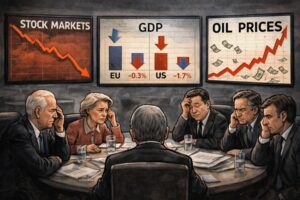
The conflict influences households far beyond Europe. Higher energy prices raise transportation and food costs. Defence spending competes with social expenditure. Persistent inflation keeps interest rates elevated across countries.
A war thousands of kilometres away now reaches ordinary citizens through electricity bills, fuel prices and economic uncertainty.
The deeper concern
Wars eventually end. But long wars leave habits behind. Governments prepare for future conflict, industries reorganise around strategic production and political trust weakens.
The post-Cold-War order — built on openness and integration — is slowly giving way to a guarded world of blocs and preparedness.
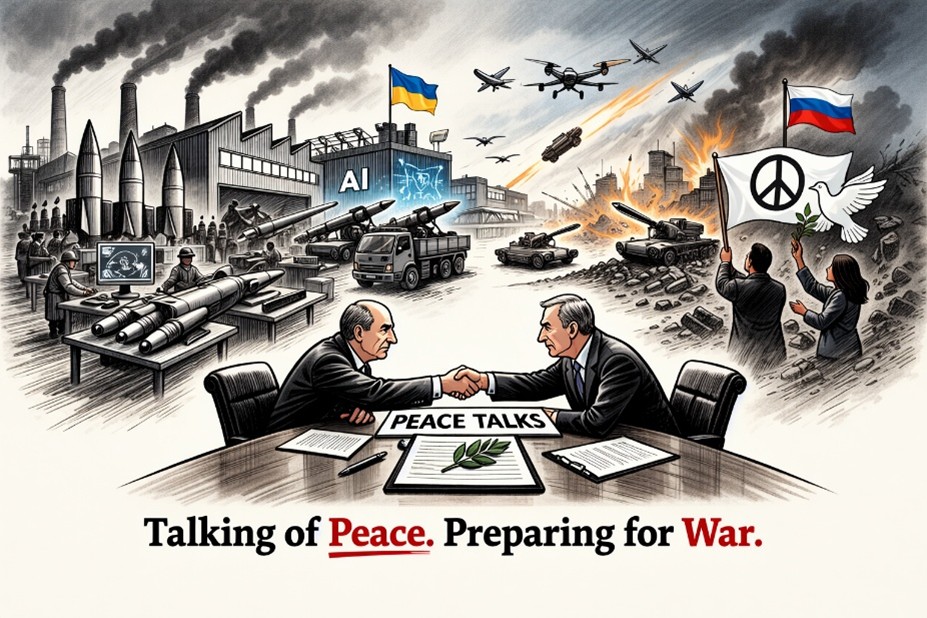
The Russia–Ukraine war may conclude at a negotiating table. Yet its legacy is already visible: a world less certain of peace, more conscious of security, and more cautious in cooperation.
The tragedy is not only the destruction it has caused.
It is that the war has changed how nations now imagine the future.
 Business and Economy
  Education
  Food
Food  Government
  Lifestyle
  Politics
  Travel
  World
World