
Why India must learn to discuss FTAs with its own citizens
By Ravishankar Kalyanasundaram
India is signing Free Trade Agreements at an unprecedented pace. But while diplomats speak abroad, the Republic at home often learns about them only through rumours. Why are citizens the last to be told about policies that will shape their economic future?
The Announcement and the Aftermath
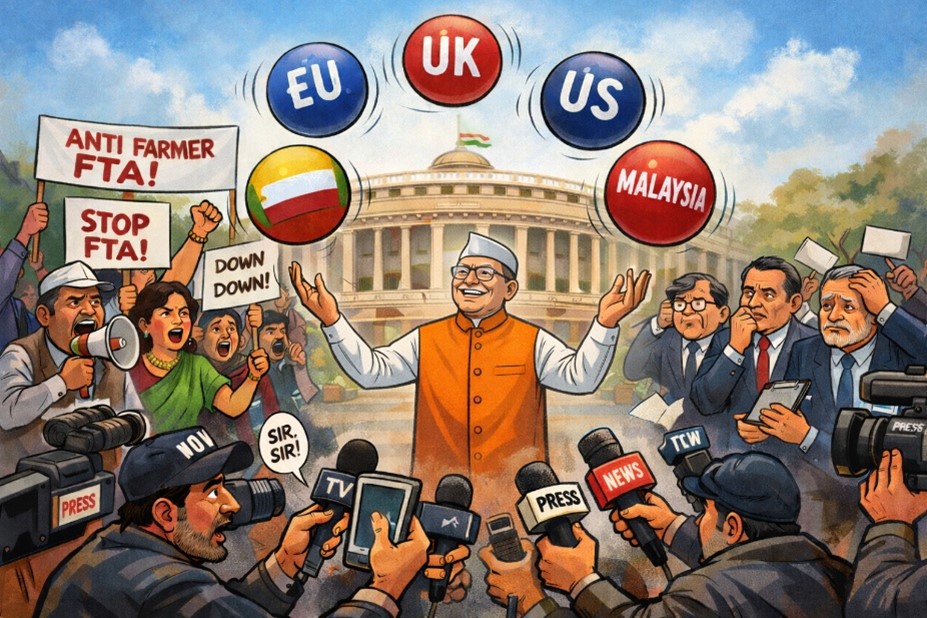
In recent months India has been signing Free Trade Agreements with a rhythm that would have been unimaginable a generation ago. Australia came first, then negotiations with the United Kingdom gathered pace, conversations with the European Union returned after years of hesitation, and now the possibility of an agreement with the United States fills our newspapers and television panels. The images are always familiar — handshakes, joint statements, carefully worded optimism. Yet once the ceremonies end, something very different begins inside the country. Not clarity. Not understanding. Instead, speculation.
Farmers hear that agriculture will be sacrificed. Small manufacturers are told imports will overwhelm them. Some believe India has committed itself to buying foreign goods in large quantities. Others expect jobs to arrive overnight. The public conversation begins before the public information does. A policy that will shape the economy for decades becomes a rumour within days.
Not Foreign Policy, but Domestic Policy
The curious truth is that a Free Trade Agreement is discussed in India as though it belongs to the foreign ministry. In reality, it belongs to the citizen. An FTA does not primarily change relations between governments; it changes the life of ordinary people in quiet but permanent ways. It decides what crops remain viable, what factories expand, what products become cheaper, what skills become valuable, and even how the State earns its revenue.
It touches the accountant who may now serve overseas clients, the architect who may design across borders, the software engineer who gains easier mobility, and even the dentist whose qualifications may suddenly be recognised abroad. Trade agreements are not abstract economic documents. They are career documents.
Manufacturers see tariffs fall and demand rise. Service professionals see new opportunities open. Industries gain cheaper inputs. Exporters gain wider markets. But farmers see price competition, and small enterprises see new pressures they must prepare for. Every FTA creates both comfort and anxiety. The question is not whether these effects exist. The question is whether citizens are told about them before they happen.
The Politics of Suspicion
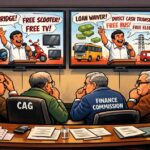
Instead, our debates occur in reverse. Parliament erupts in accusation. The Opposition calls the agreement anti-farmer. The Government responds with reassurance. Ministers redirect questions. Television debates amplify fragments of negotiation leaks. Each side speaks loudly, but very little is explained carefully. A nation of 1.4 billion people is asked to form opinions about a document it has never seen and implications it has never been prepared for.
This is not an economic failure. It is a communication failure between the State and the Republic.
We Have Seen This Before
We have lived through this before. The ASEAN agreement still circulates in the memories of small industrial associations, particularly among MSMEs who felt competition arrived before preparation. Whether every complaint was economically precise matters less than the sentiment it created. Policy does not succeed only in spreadsheets; it succeeds in confidence.
When citizens feel consulted, they adjust.
When they feel surprised, they resist.
Consultation does not weaken negotiation. It strengthens legitimacy. Imagine a different approach. Before signing, the government explains sector-wise implications. Farmer groups are briefed. Industry bodies examine transition needs. Professional associations understand mobility provisions. State governments debate regional consequences. The negotiators would still negotiate, but the country would be prepared. Instead of rumours there would be readiness, instead of suspicion there would be ownership.
Trade Has Changed
Trade is no longer only about goods crossing ports. It now includes technology standards, supply chains, professional mobility, intellectual property, data flows and economic security. Countries sign trade agreements not merely to sell products but to position themselves within global networks of production and innovation.
India cannot remain outside that system. Nor should it.
The real question is not whether India should sign FTAs. It must.
The real question is whether India should sign them silently.
Parliament Without Information
Even Parliament struggles because information is partial. The Government finds itself defending what it cannot fully disclose. The Opposition criticises what it cannot fully know. The result is not debate but theatre. And the citizen, the actual stakeholder, remains outside the room.
A Republic weakens not when policy is questioned but when policy is guessed.
Democracy is not only the right to vote; it is the right to understand direction. Citizens do not require negotiating details, but they do require explanation and preparation. Economic policy should not arrive as surprise. Trade agreements should not be documents signed abroad and interpreted at home through television arguments. They should be national choices understood at home before they are signed abroad.
Making Agreements Matter
Every agreement produces temporary discomfort somewhere. Good policy manages transition — through training, credit, infrastructure and support. But preparation requires anticipation, and anticipation requires conversation.
If we learn from past experience and prepare sectors early, trade agreements can become catalysts of development. If we do not, they will repeatedly become political controversies regardless of their economic merit.
India today stands between two economic identities. It is no longer a closed economy, yet not fully an open one. It is integrating with the world while still protecting domestic capacity. That balancing act cannot succeed without trust. Trust comes not from secrecy but from clarity. A confident government does not fear explanation. It encourages it.
The Republic Must Be Included
The Republic is not merely an electorate. It is a participant in the national journey. Citizens need not negotiate treaties, but they must understand the direction in which their country is moving. A nation grows stronger not only when exports rise but when its people feel included in its decisions.
Perhaps the unfinished task of our Republic is not simply building highways, industries or digital platforms. It is building public understanding.
Because a Republic is not only administered.
It is shared.

 Business and Economy
  Education
  Food
Food  Government
  Lifestyle
  Politics
  Travel
  World
World