
Is the world under the mercy of a leader who can choose one morning to annihilate the entire civilisation by — or resurrect another by his mercy?
By Ravishankar Kalyanasundaram
In an age where a single command can move missiles, freeze economies, or ignite conflicts, leadership matters more than at any other point in modern history. Yet the deeper concern today is not merely about powerful leaders. It is about the alarming scarcity of convincing ones.
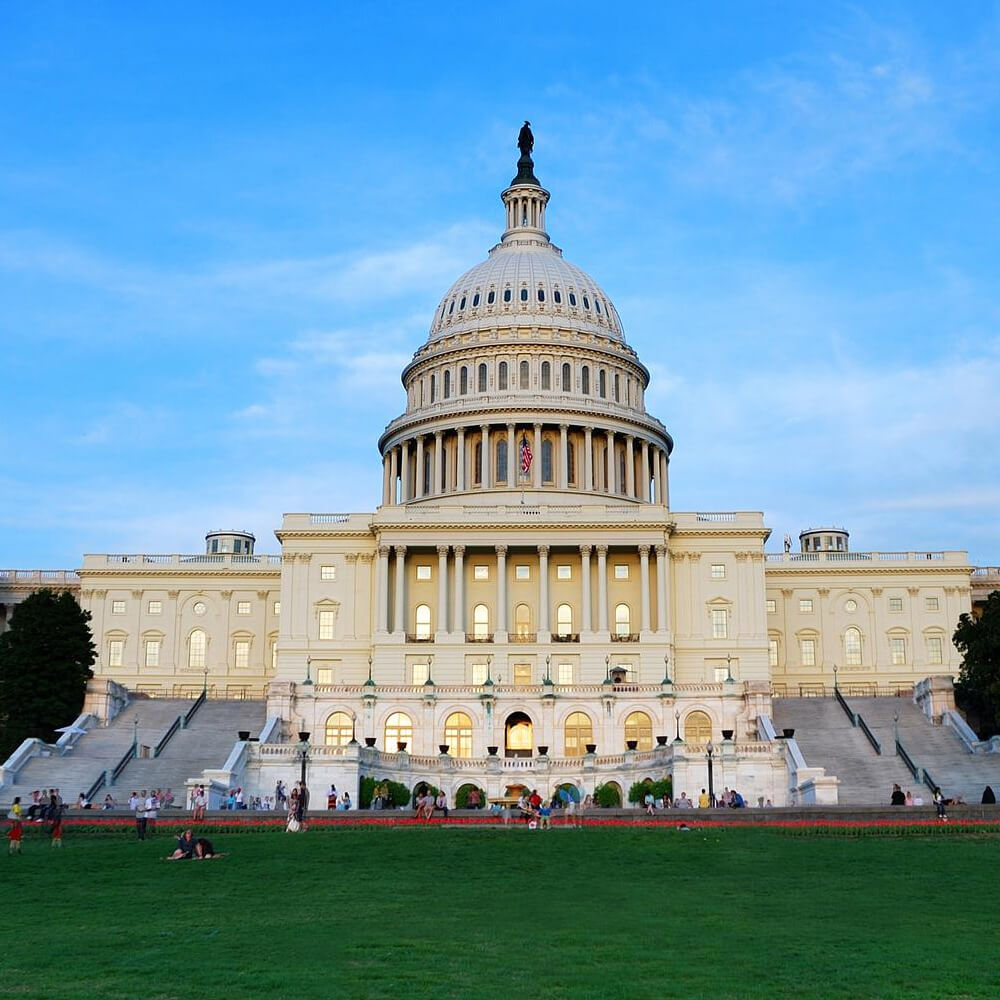
Take the United States, the world’s most influential democracy.
Is it that the American people simply had no choice but Donald Trump?
It would be simplistic to believe so. After all, Trump did not seize power outside the system. He travelled through the very constitutional path designed by some of the finest political minds of the country. He contested primaries, mobilised voters, secured his party’s nomination, and ultimately won elections through the democratic process.
That raises a more unsettling question.
If a mature democracy with deep institutions and a vast pool of talent repeatedly arrives at the same polarising choice, what does it say about the system that produces its leaders?
The answer perhaps lies less in personalities and more in the changing mechanics of modern politics — where charisma often outweighs deliberation, media visibility eclipses quiet competence, and parties increasingly struggle to nurture leaders who can command both trust and imagination.
The result is a paradox of our time. Democracies have never had more educated citizens, stronger institutions, or wider access to information. Yet the supply of leaders who inspire broad confidence appears thinner than ever.
And that is the real question confronting not just America, but much of the democratic world today.
Across the aisle, the Democrats faced a different but equally revealing dilemma. Joe Biden, already well into his eighties during the campaign cycle, remained the party’s most viable candidate. Many observers quietly noted that the world’s most powerful democracy seemed unable to produce a younger, charismatic successor capable of inspiring broad national confidence.
Look at the bench today and the question becomes unavoidable: who stands out with the stature to command the entire nation?
Contrast this with earlier decades of American politics. The Democratic Party once produced towering national figures such as Franklin D. Roosevelt, whose leadership carried the country through the Great Depression and World War; John F. Kennedy, whose youthful charisma reshaped political imagination; and Bill Clinton, who combined political skill with an ability to communicate across social divides. Even Barack Obama, more recently, energised a generation with a message of renewal.
The Republican bench too once offered leaders whose appeal extended well beyond their party faithful. Dwight Eisenhower brought wartime credibility and calm authority. Ronald Reagan combined ideological conviction with a remarkable ability to communicate optimism. George H. W. Bush, though quieter in style, carried decades of experience across diplomacy, intelligence, and governance.
When such figures dominated the stage, elections often felt like contests between competing visions for the country.
Today, however, many observers sense something different. The political arena appears filled with capable administrators, skilled campaigners, and strong partisan voices — yet far fewer leaders who seem able to command universal respect or inspire confidence across the entire national spectrum.
That is the deeper puzzle confronting modern democracies.
It is not merely about who wins elections. It is about whether the system still cultivates leaders who can rise above the noise of politics and speak convincingly for the nation as a whole.
For a country of over 330 million people — with the world’s finest universities, the most sophisticated media networks, and the deepest democratic traditions — the absence of compelling alternatives raises an uncomfortable question.
Where are the leaders?
The pattern does not stop in America.
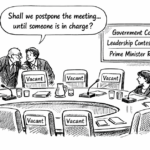
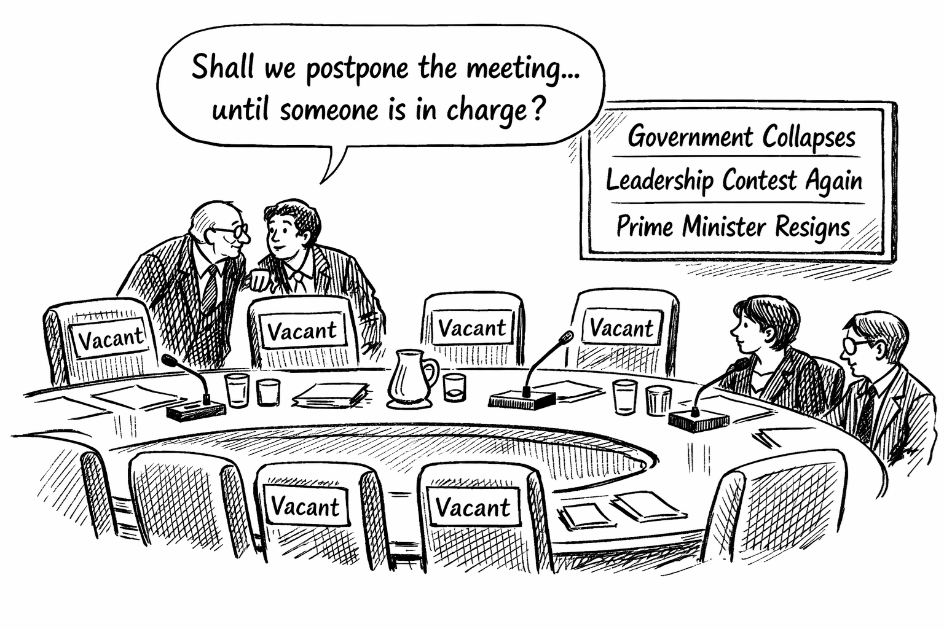
Britain, the birthplace of parliamentary democracy, recently witnessed a carousel of prime ministers appearing and disappearing in rapid succession. France continues to grapple with public unrest and fragmented political mandates. Japan has had periods where prime ministers changed frequently enough that even attentive citizens struggled to remember who held office.
These nations are not fragile republics still discovering democracy. They are the pillars upon which the modern democratic order was built.
And yet, across them, something feels missing.
The world once witnessed leaders who commanded both authority and imagination. Figures such as Lee Kuan Yew in Singapore, Margaret Thatcher in Britain, Bill Clinton in the United States, or Shinzo Abe in Japan shaped policy with conviction and charisma. They were controversial at times, admired at others, but rarely ignored.
Today they appear almost like characters from a political fable — leaders who possessed both vision and the personal authority to carry their nations forward.
Why does the present moment feel different?
Part of the answer lies in the changing architecture of politics itself.
In many democracies, legacy political parties have slowly hardened into closed ecosystems. Candidate selection, campaign machinery and internal influence often remain tightly controlled by established networks. New leaders, however talented, struggle to break through these structures.
Funding has become another barrier. Modern elections require vast financial resources. Political campaigns increasingly depend on large donor networks and complex digital outreach operations. Individuals outside established circles find it extremely difficult to compete.
Media dynamics also shape the leadership landscape. The age of social media rewards outrage and spectacle far more than thoughtful persuasion. Leaders who dominate headlines through confrontation gain visibility, while those who seek consensus often remain unnoticed.
Gradually, political systems begin producing leaders who energise factions rather than leaders who unite societies.
The quiet art of statesmanship — the ability to command respect even from rivals — begins to fade.
For large and diverse nations this trend is particularly worrying. Governing vast populations requires more than electoral victory. It demands balance, patience and the instinct to hold together societies with many aspirations and identities.
India, fortunately, stands on relatively steadier ground at this moment.
Prime Minister Narendra Modi remains one of the few contemporary leaders with sustained political charisma and a clear national mandate. His ability to mobilise political support across the country has provided stability at a time when many democracies appear unsettled. Equally significant is the emphasis on inclusive development — the idea that growth must reach every section of society.
For a nation of over 1.4 billion people, such leadership carries enormous responsibility.
Yet the global concern remains larger than any one country.
Leadership should not become a rare accident of history. Democracies must continually produce leaders capable of representing their people with credibility at home and confidence on the world stage.
The world today faces geopolitical tensions, economic uncertainty, technological disruption and climate risks. These challenges demand leaders who possess not merely power but wisdom — leaders who can inspire trust, build consensus and guide societies through complexity.
Such leaders undoubtedly exist among millions of citizens.
The question confronting modern democracies is whether their political systems still allow them to emerge.
For in the years ahead, the world’s future will depend on them.

 Business and Economy
  Education
  Food
Food  Government
  Lifestyle
  Politics
  Travel
  World
World