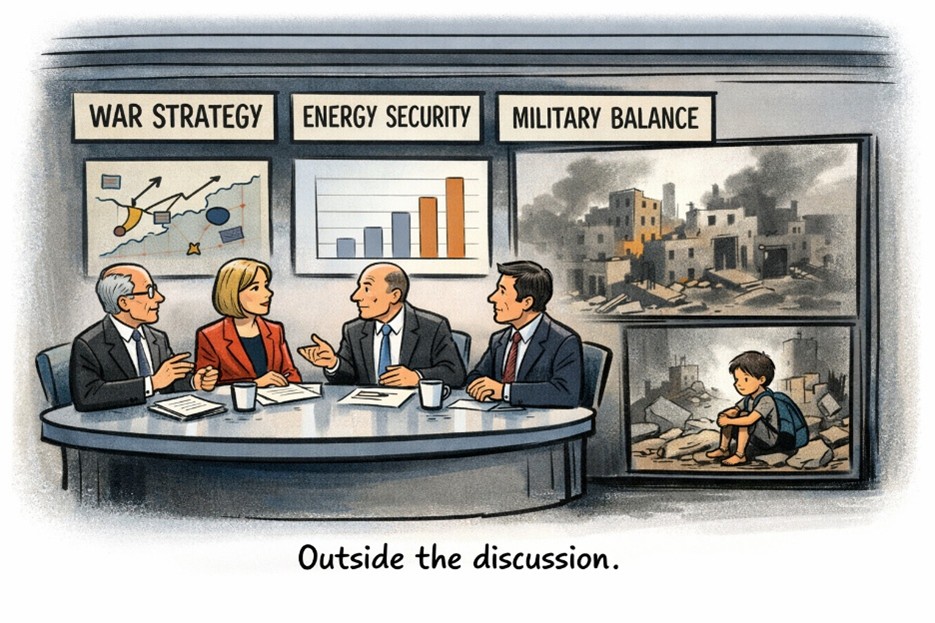

When strategy dominates the conversation, the suffering of ordinary people disappears.
By Ravishankar Kalyanasundaram
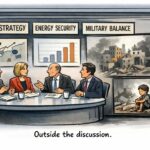
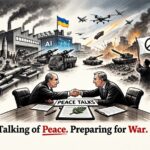
Across television studios, policy forums and think-tanks, the language of war is strangely composed. Analysts speak of deterrence, escalation control and geopolitical stability. Economists examine disrupted trade routes and energy supplies. Governments discuss alliances, military preparedness and strategic doctrines.
War is explained with calm vocabulary.
Yet somewhere within this confident language, the most important truth quietly disappears.
Every missile launched, every drone strike executed and every city bombed does not fall on strategy. It falls on human lives.
Children who should be learning in classrooms become victims of battles they never chose. Families who once lived ordinary lives suddenly find themselves displaced, frightened and uncertain. Streets that once carried the sounds of daily life become landscapes of smoke, rubble and silence.
The vocabulary of war rarely pauses long enough to acknowledge them.
History has shown humanity this tragedy many times before. The twentieth century was meant to be the great warning. Two world wars turned entire continents into graveyards. Cities that once symbolised civilisation were reduced to ruins. Tens of millions of ordinary people lost their lives in conflicts that began with political calculations and strategic ambitions.
When those wars ended, the world promised itself that such devastation would never again unfold without restraint. Institutions like the United Nations were created precisely so that disputes between nations would be resolved through dialogue rather than destruction.
But the decades that followed slowly eroded that promise.
Vietnam burned for years while the world debated ideology and strategy. Iraq witnessed war justified by claims that history later questioned, yet the destruction of cities and communities remained real. Afghanistan endured decades of conflict while generations grew up knowing war as the normal condition of life.
Each time, the language of justification sounded familiar.
Security demanded it. Stability required it. Freedom depended on it.
Yet the consequences always looked the same — families grieving, cities broken, and millions of ordinary people forced to flee their homes.
Those who escape war often discover another harsh reality. The nations that speak passionately about global values sometimes hesitate when refugees arrive at their shores. Boats carrying desperate families drift across seas while governments debate immigration rules and border controls.
The bombs may have been justified in the name of freedom, but the victims of those bombs often find that freedom has no welcoming harbour.
After witnessing a century marked by devastating wars and immense human suffering, have we truly become wiser? Have the lessons of history strengthened our commitment to peace, or have we simply learned to describe war with more sophisticated language?
Across policy forums and media discussions, the world continues to debate strategy and security. These debates may be necessary. Nations must think about their safety and their interests.
But somewhere within these conversations, humanity must also preserve its moral centre.
Because every bomb dropped on a city carries consequences far beyond the battlefield. It alters childhoods, reshapes families and creates scars that endure for generations. The children who die in these conflicts did not choose the politics that created them. The parents who bury them had no voice in the strategic calculations that justified the bombing.
If history teaches anything, it is that peace cannot survive on institutions and agreements alone. It requires something deeper — a collective refusal to accept violence as inevitable.
And that refusal begins not in conference halls but in the conscience of ordinary people.
The question before us is therefore not only about the wars of today.
It is about whether we, as a global society that has witnessed so much suffering, are finally prepared to say that humanity deserves something better.
 Business and Economy
  Education
  Food
Food  Government
  Lifestyle
  Politics
  Travel
  World
World