
When institutions are replaced by personalities, the world rarely becomes more peaceful. It becomes more fragile.
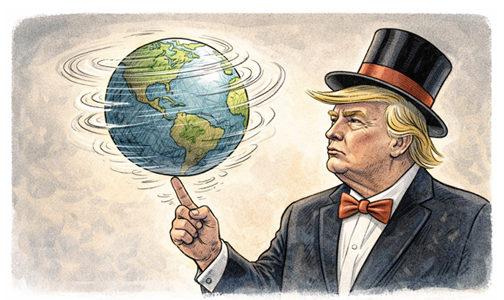
Trump is at it again. This time with a proposal for a “Board of Peace” — a group of leaders brought together to resolve global conflicts, beginning with Israel–Gaza, outside existing international institutions. No bureaucracy. No slow processes. Action instead of procedure. Decisiveness instead of delay.
At first glance, the idea sounds tempting. In a world exhausted by endless statements and stalled resolutions, speed feels like virtue. When wars drag on and institutions appear paralysed, the promise of swift intervention has emotional appeal.
The proposal comes from Donald Trump, and the global reaction has been telling — not just applause from supporters or outrage from critics, but something deeper: unease. History teaches a hard lesson. Whenever institutions are declared obsolete and replaced by personalities, the world rarely becomes more peaceful. It becomes more fragile.
The United Nations was not created out of idealism alone. It was born out of exhaustion. After two world wars, humanity arrived at a sobering conclusion: peace could not depend on the temperament, ambition, or moral certainty of any one leader or nation. It had to be collective, rule-based, and shared.
Yes, it had to be slow. Yes, it had to be imperfect. But it had to outlast individuals.
Today, patience is in short supply. Institutions are mocked as ineffective. Multilateralism is dismissed as weakness. Consensus is portrayed as indecision. In its place, we are offered speed, authority, and decisive leadership.
This temptation is not new. The League of Nations failed not because institutions are useless, but because powerful countries chose to bypass it. In the 1930s, strong leaders promised quick fixes and national revival, portraying institutions as obstacles. History records where that road led.
Even in recent decades, conflicts pursued outside multilateral frameworks have not delivered durable peace. Iraq, Libya, and Afghanistan were entered with confidence and speed, but without lasting global legitimacy. The result was instability, resentment, and power vacuums that still haunt regions.
What happens when peace is pursued outside institutions? First, peace becomes selective. Some conflicts matter more than others. Second, rules become elastic — strict for rivals, flexible for allies. Third, accountability dissolves. When peace fails, there is no system to correct course, only individuals to defend or disown.
A “Board of Peace” may look efficient. But efficiency without legitimacy rarely survives time. Peace is not a transaction. It cannot be negotiated like a trade deal. It requires memory, restraint, and continuity — qualities institutions preserve because leaders change.
For countries like India, this debate is not theoretical. Institutions create predictability. They protect middle and smaller powers from the whims of the strong. They replace raw power with agreed rules.
The danger is not that global institutions struggle. That was expected. The danger is that impatience dismantles the guardrails that restrain power.
The world does not need fewer institutions. It needs better ones. And it does not need louder leaders. It needs wiser ones.
If we forget why institutions were created, history has a habit of reminding us again and again.


 Business and Economy
  Education
  Food
Food  Government
  Lifestyle
  Politics
  Travel
  World
World