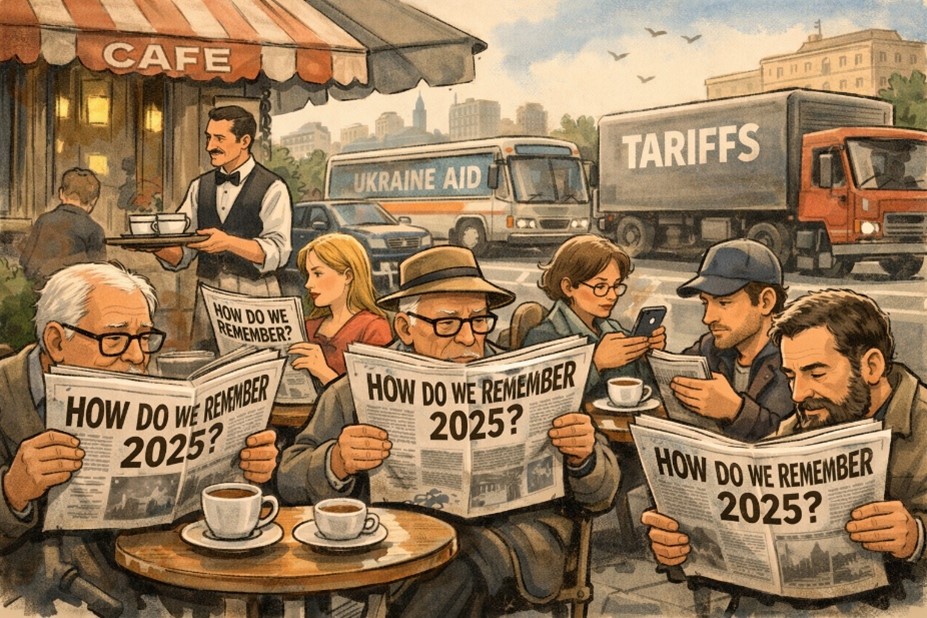

As power bent rules, wars dragged on, and technology raced ahead, the world discovered that old assumptions no longer worked.
2025 did not collapse the global order — it quietly revealed how fragile its habits had become.
Not for a single dramatic rupture. Not for one speech, one election, or one battlefield turning the tide. We will remember it as the year when many of us sensed — uneasily but unmistakably — that the old anchors no longer held.
It was the year the world kept moving, investing, trading, fighting, legislating — yet felt oddly unmoored.
Do we remember 2025 for South Asia’s political churn, where elections and shifting alliances reflected not renewal but strain? For the way domestic politics spilled across borders, shaping diplomacy and alliances less through principle and more through pressure?
Or do we remember it for the quiet retreat from globalization — not reversed, not renounced, but carefully hedged away? Supply chains shortened. Trade rules bent. Tariffs returned, not as economic instruments but as political signals. Protectionism was rarely named; it was wrapped instead in the language of security and resilience.
Do we remember 2025 as the year technology stopped being just progress and became strategy?
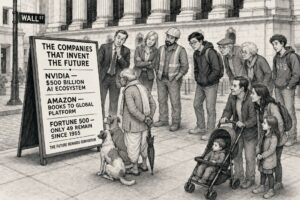
Capital surged into artificial intelligence, semiconductors, compute infrastructure, defence technology, and energy systems. Governments spoke the language of markets while acting like planners. Corporations spoke of values while recalibrating exposure. Innovation accelerated — but coordination did not.
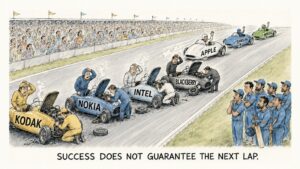
Faster machines, it turned out, did not guarantee wiser choices.
2025 was also a year of moral dissonance.
Legal processes blurred into political theatre. Accountability was reframed as persecution; proximity to power became a shield. Across democracies, the idea of “lawfare” entered public conversation — not as a warning, but increasingly as a defence. Justice did not disappear. It bent.
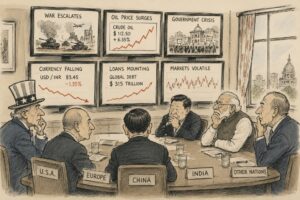
Wars dragged on without resolution. Ukraine remained not just a military conflict but a test of endurance — political, economic, and moral. Europe prepared to fund continued resistance even as its own fiscal foundations felt increasingly fragile. Debt climbed to levels once described by the IMF as unsustainable — and yet postponement replaced correction.
No one claimed this was painless. We simply chose not to confront the pain yet.
Borders hardened in quieter ways. Visa regimes tightened. Mobility — once globalization’s most human promise — became conditional. Talent flowed selectively; people were filtered. Connections mattered more than credentials.
And hovering over it all were reminders that power still protects itself well. Old scandals resurfaced. Files were promised. Revelations teased. Then attention moved on. Systems, as ever, proved adept at laundering reputations of the well-connected while preaching transparency to everyone else.
So how will we remember 2025?
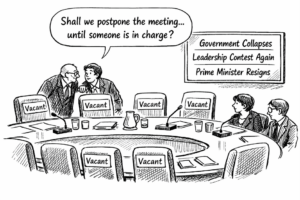
Not as a year when institutions collapsed — but as one when they thinned. They continued to convene, publish, pronounce. Yet their authority felt lighter. Their moral force more negotiable.
Trade bent to domestic politics. Corporate values bent to political weather. Institutions preserved form while losing force. Nations postponed hard choices by calling them flexibility.
And yet, 2025 did not ask us to panic.
It asked us to pay attention.
To notice how often short-term comfort replaced long-term coherence. How frequently strategy gave way to hedging. How contradictions were managed rather than resolved.
History may not record 2025 as a dramatic turning point. There were no walls falling, no single shock resetting the world overnight.
It may remember it instead as a warning — the moment when the world realised that old assumptions no longer worked, yet new ones had not fully formed.
A year of transition without a map.
As we step into 2026, the question is not whether the world will change — it already has.
The question is whether we respond with greater resolve, or continue mistaking motion for direction.
The road ahead remains unfinished.
But 2025 reminded us, quietly and firmly, that ignoring the signs is no longer a neutral choice.
 Business and Economy
  Education
  Food
Food  Government
  Lifestyle
  Politics
  Travel
  World
World