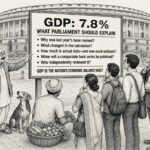

How hype became currency, valuations became theatre, and ordinary investors were left applauding illusions instead of profits.
By Ravishankar Kalyanasundaram
When Michael Burry — the investor who predicted the 2008 global financial crisis — warns that Tesla is “ridiculously overvalued,” markets listen. His latest caution is not merely about Tesla’s share price. It is about a disease that has infected the modern investing world: the belief that a business is worth what people are willing to dream, not what it is actually able to deliver. In the electric-vehicle legend’s case, expectations of a $1 trillion future payout have already been priced into the stock before the returns have materialised. Burry’s message is simple: when hype becomes valuation, the investor becomes a spectator of someone else’s dream, rather than a partner in business reality.
This is not new. Every decade has its valuation bubble — oil in the 70s, Japanese real estate in the 80s, dot-coms in the 90s, housing in the 2000s, cryptocurrencies and tech unicorns in the 2010s. The script remains the same. A breakthrough idea triggers imagination. Money flows into the idea faster than the idea can turn into cash flow. Valuation flies to the sky first; revenue and profits catch up later, or sometimes never. A handful of founders become billionaires overnight, venture funds exit at spectacular premiums, and late-cycle retail investors are left holding shares priced not in performance, but in hope.
The problem begins with a simple truth: markets reward stories. If a founder has a grand narrative, if a business claims to “disrupt” something, if the pitch deck has hockey-stick revenue projections, valuation becomes a weapon. There is no penalty for exaggeration because the market will believe anything as long as somebody richer believes it first. Early investors pump capital, valuations multiply, private deals are priced at levels that have nothing to do with the balance sheet, and soon the number becomes the headline — “$10 billion startup,” “$50 billion IPO candidate,” “potential trillion-dollar disruptor.” Somewhere along the way, the business itself becomes secondary.
Tesla is merely the latest flashpoint. Its technological innovations are real. Its contribution to the EV revolution is undeniable. But the expectation that one company will dominate global transportation, battery supply, self-driving, robotics and energy storage all at the same time has turned the share price into the scoreboard of dreams rather than sales, margins and sustainable growth. And this is exactly where bubbles are born — not in ideas, but in exaggerations of those ideas.
History is littered with companies that crashed not because they lacked expertise, but because they were priced far beyond their economic reality. Pets.com, Enron, WeWork, Theranos, Luckin Coffee, and a long list of crypto-exchanges all had one thing in common: valuation surged on narrative long before results arrived. In some cases, results never came at all. In the dot-com bubble, hundreds of startups were valued in billions despite having no revenue model and sometimes not even a working product. In the unicorn boom of the 2010s, many startups raised money based on the promise of “growth later” but were burning more cash per day than their entire annual revenue. WeWork told the world it would transform office life; instead it transformed into one of the most dramatic valuation collapses of the decade. Theranos claimed a medical miracle but delivered fraud. The illusion of valuation was strong enough to silence common sense.
This cycle works because it has beneficiaries. Early venture funds leverage rising valuations to exit at massive profits. Investment banks earn fees on hype. Influencers and media push seductive narratives. Retail investors, eager not to miss the next Tesla or the next Amazon, arrive late and buy at the top, when smart money is preparing to exit. The tragedy of valuation bubbles is not that companies collapse — some survive. The tragedy is that ordinary investors enter after all the value has already been extracted.
It is not that big companies should not be valued highly. Apple, Google, Microsoft and Amazon did deserve their massive valuations, but they earned them through cash flows, not hype. Their scale was supported by profits, not just projections. Yet for every genuine tech legend, there are dozens of companies whose worth exists only on PowerPoint slides and social media. The mirage is not that valuations are high; it is that valuations become disconnected from fundamentals.
Warren Buffett has been the opposite voice in this theatre of excitement. His principle is painfully simple: valuation is what you pay; value is what you get. The louder the noise around a stock, the more suspicious he becomes. He famously said the market behaves like a voting machine in the short term and a weighing machine in the long term. In the short term, popularity drives price. In the long term, fundamentals drive survival. The valuation bubble feeds on the first machine and eventually crashes into the second.
None of this means innovation should be ignored or risk avoided. It means risk should be priced, not fantasised. A company experimenting in a new field should be valued for what it has done — not what it might possibly accomplish one day in an alternate universe. The trouble begins when markets behave as if every company will change the world, when in truth only a handful will. Companies do not become trillion-dollar legends because we want them to. They become legends because their profits justify it.
Investing has changed in recent years because of the information explosion. The democratization of trading — with apps, online brokers, YouTubers and influencers — has brought millions of young Indians and global retail investors into the market. That is a historic achievement. But there is also a danger. When information spreads faster than understanding, people begin to invest not in businesses but in trends. When opinion moves faster than analysis, rumours begin to look like research. And when valuation climbs faster than revenue, losses arrive faster than wisdom.
Tesla may or may not correct sharply. It may justify its valuation or take a decade to do so. The point is not whether Tesla succeeds. The point is that markets are beginning to forget the difference between technology and mythology. Innovation deserves admiration. Valuation deserves scepticism. A good product does not guarantee a good stock. A great founder does not guarantee a great business. A trending industry does not guarantee sustainable returns.
The new investing world has only one silent lesson: if a company is priced for perfection, any imperfection can destroy wealth. If a business is valued for the future, reality eventually catches up to fantasy. The stock market rewards patience, but it punishes imagination when it is mistaken for conviction. Investors do not lose money because companies fail. They lose money because they buy stories without looking at numbers.
Michael Burry’s warning is not just about Tesla. It is about the fever that grips markets every few years. The mirage we keep chasing is not innovation. It is valuation without value. The real legends of investing — Buffett, Munger, Lynch and others — built fortunes not by predicting the next miracle, but by buying solid businesses at sensible prices. They did not chase the loudest company in the room. They chose the most reliable.
When the music of hype stops, there is always someone left without a chair. The goal of investing is not to be the last enthusiast in the room. It is to walk out with dignity before excitement turns into regret.



 Business and Economy
  Education
  Food
Food  Government
  Lifestyle
  Politics
  Travel
  World
World